
Thomism Recovered
ISTA. Lecture 13. A Brief History of Thomism, part 1: from 1801 to the present
[The study of truth is a spiritual discipline, and theologians are borne on their knees. I instruct the reader to begin this, and every lecture, by elevating his mind to God. I suggest Saint Thomas’ Prayer Before Study.]
In last week’s lecture, The Golden Age of Thomism, I proposed my reader a brief exposition on the History of Thomism between 1401 and 1800. Today, we move on to the period after 1800, up to the present times.1
The Pre-Leonine Dawn
In the 18th century, Thomism suffered a massive declining. The intellectual situation was very complex, and even the ecclesiastical context reflected all the problems of its times—illuminism, rationalism, gallicanism, jansenism, and so on. Not to mention the Napoleonic persecution and the destruction of monastic libraries.
Despite all that, the seed of Thomistic thought survived. Men as Charles René Billuart, O.P.,2 Salvatore Maria Roselli, O.P.,3 and Petrus Maria Gazzaniga, O.P.,4 ensured that the 18th century was not devoid of all Thomism. In the 19th century, a revival began. After a long winter, these seeds eventually blossomed.
In Italy, men like Vincenzo Buzzetti in Piacenza, Gaetano Sanseverino in Naples, and the Jesuit Matteo Liberatore began a slow, meticulous reconstruction of scholastic thought. In my dear Iberian Peninsula, figures like Jaime Balmes and the great Dominican Zeferino González (who would later become a Cardinal) wrote monumental histories of philosophy from a strictly Thomistic perspective.
The core struggle for these early pioneers was fierce. They had to fight not only against secular rationalism but also against the prevailing Catholic philosophies of their own time—namely, Ontologism and Traditionalism (or Fideism)—which had tragically abandoned metaphysical reason in their panic over modern skepticism.
The Leonine Revolution
The true resurrection, however, came from the Chair of Peter. When Pope Leo XIII ascended to the papacy, he brilliantly diagnosed that the crisis of modernity was, fundamentally, a crisis of philosophical reason. On August 4th, 1879, he promulgated the landmark Encyclical Aeterni Patris.
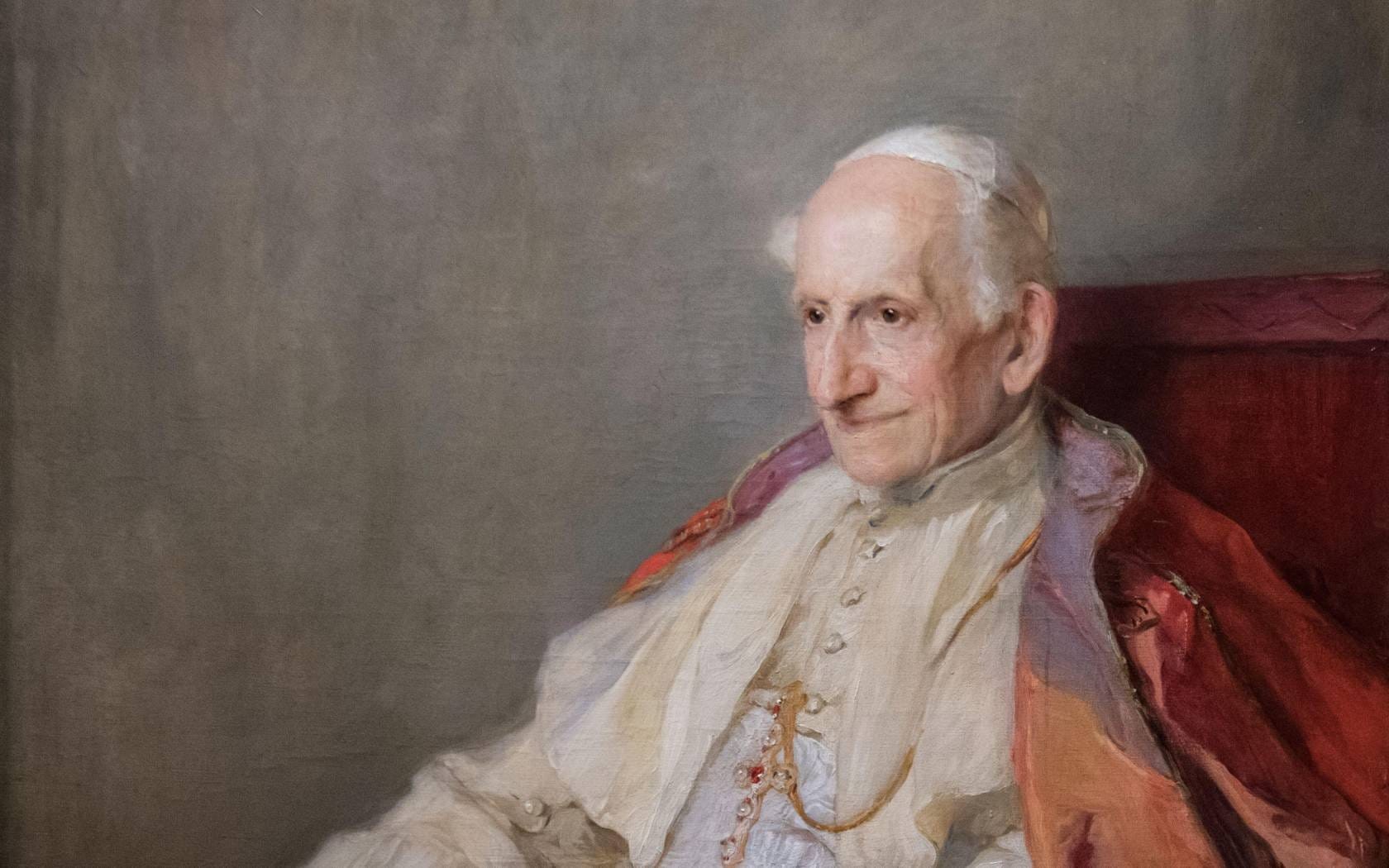
I cannot overstate the importance of this document to my reader, but, again, we have already covered it. It was a universal, binding mandate for the entire Church to restore Christian philosophy according to the mind of Saint Thomas Aquinas. The structural consequences were immediate and world-altering: the foundation of the Roman Academy of Saint Thomas Aquinas, the creation of the Leonine Commission to rigorously edit and publish the definitive Opera Omnia of the Angelic Doctor, and the strict mandate that all Catholic seminaries and universities must teach Aquinas.
The Institutional Expansion and the Great Centers
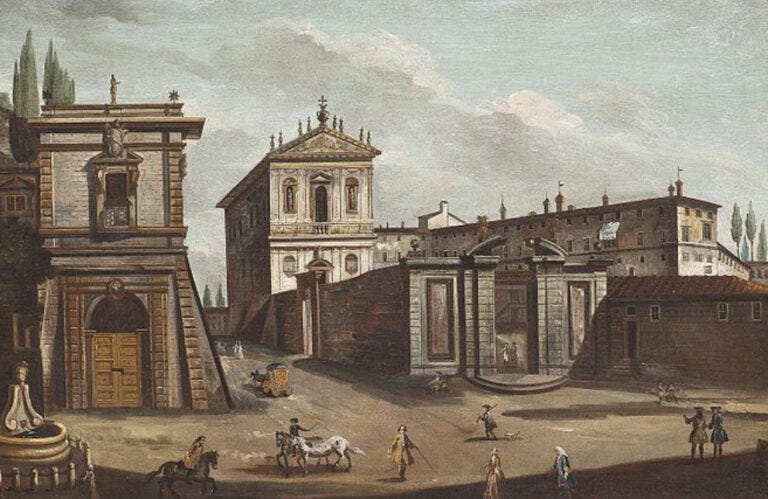
Under this papal mandate, Thomism expanded institutionally. Rome became once again the intellectual heart of this revival, spearheaded by the Collegium Divi Thomae (the future Angelicum) under the Dominicans, and the Gregorian University under the Jesuits.
But we must also look north, to Belgium. At the Catholic University of Louvain, Cardinal Désiré-Joseph Mercier founded the Institut Supérieur de Philosophie. Mercier’s unique and brilliant contribution was his insistence that Neo-Thomism must not become an isolated museum piece. Rather, it had to enter into direct, rigorous dialogue with modern experimental sciences—such as psychology and physics—to prove its living, perennial validity.
The Great Twentieth-Century Masteries
The twentieth century produced absolute titans of the school.5 In the realm of strict and grounded Thomism, none stands taller than the legendary Fr. Réginald Garrigou-Lagrange, O.P. Teaching at the Angelicum, he became the uncompromising defender of classical Thomistic metaphysics and famously applied it to spiritual and mystical theology, proving once and for all that contemplation and scholastic rigor are not at odds, not even slightly.
Alongside him emerged what is often called Existential or Historical Thomism. Étienne Gilson rediscovered the historical purity of medieval thought, arguing brilliantly that Thomism is fundamentally a philosophy of esse (the act of to-be), distinct from the essentialist or rationalist distortions of later centuries. Jacques Maritain took Thomistic principles and applied them profoundly to modern political philosophy, aesthetics, and the concept of integral humanism. He has equally deep (or even deeper) treatises on Epistemology and Metaphysics.
Other magnificent minds graced this century, such as Fr. Santiago Ramírez, O.P., in Spain, and Cornelio Fabro in Italy, whose deep focus on the metaphysical notion of intensive participation remains an absolute treasure.
The Crises and Confrontations
This revival was inevitably tested by two great crises. The first was the Modernist Crisis at the dawn of the twentieth century. Pope Saint Pius X wielded Thomism as the primary philosophical weapon against the slippery historicism of the Modernists (most notably in his encyclical Pascendi Dominici), a defense which culminated in the promulgation of the 24 Thomistic Theses in 1914 to define strict philosophical orthodoxy.
The second test was the Mid-Century Crisis, driven by the Nouvelle Théologie, which attempted to bypass scholasticism altogether in favor of a purely patristic or existential return. Pope Pius XII responded with the encyclical Humani Generis (1950), forcefully reaffirming Thomism as the indispensable shield against relativistic and historicist errors.6
The Post-Conciliar Landscape and Contemporary Currents
As we discussed in our lecture The Apostle of Truth, the landscape following the Second Vatican Council saw an apparent institutional weakening of Thomism. However, the intellectual vitality of the school adapted into new, complex currents.
Transcendental Thomism, led by figures like Joseph Maréchal, S.J., Bernard Lonergan, S.J., and Joseph de Finance, S.J., attempted an intellectual bridge between the metaphysical structure of Aquinas and the “innovations” of Immanuel Kant.
More recently, we have witnessed the rise of Analytical Thomism. Philosophers like John Haldane, G.E.M. Anscombe, and Peter Geach have brought Aquinas into direct, fruitful dialogue with modern analytic philosophy—engaging with the likes of Gottlob Frege and Ludwig Wittgenstein—particularly in the fields of epistemology, logic, and the philosophy of mind.
Throughout it all, the permanent law of the Church remains. Canon 251 of the Code of Canon Law and Pope Saint John Paul II’s Fides et Ratio continually remind the Universal Church that Saint Thomas remains the supreme master of the right way to do theology.7
Others try to sell you cheap Thomism.
Consider supporting my work:
a grounded, rigorous, living, and respectable Thomism.
Today we have covered the contemporary revival of Thomism, from 1801 onwards. This concluded our historical overview. However, my reader may remember, this historical effort is to be understood as a necessary part of our answer to the question “what is Thomism?” It is to that question that we turn our attention next week.
Gonçalo Costa
The Respectable Thomist
Bibliography
If the reader wishes to go deeper in these topics, he may consider the following works.
These presentations on the history of Thomism are enormously indebted to fr. Efrem Jindráček, O.P., who teaches Storia del Tomismo at the Pontifical University of Saint Thomas Aquinas, in Rome.
Revin 1685 - Douai 1757. His masterpiece, in 19 volumes, is Summa Sancti Thomae hodiernis academiarum moribus accomodata (“The Summa of Saint Thomas, accomodated to the costums of contemporary academies”).
1722 - Rome 1784. His masterpiece, in 6 volumes, is Summa Philosophica ad mentem angelici doctoris S. Thomae Aquinatis (“Philosophical Summary according to the mind of the Angelic Doctor, St. Thomas Aquinas”).
Bergamo 1722 - Vicenza 1799. His masterpiece, in 9 volumes, is Praelectiones theologicae (“Theological Lectures”).
For a fuller list of contemporary approaches to Thomism, check our previous lecture, On Thomism. Whether there is such a thing.
It would be impossible to mention all great names. For the reader’s convenience, I provide here some further names.
Belonging to the Dominican Order: Tommaso Maria Soldati, O.P. (1735–1807); Mariano Spada, O.P. (1796–1872); Giacinto Maria Giuseppe De Ferrari, O.P. (1805–1874); Cardinal Filippo Maria Guidi, O.P. (1815–1879); Cardinal Thomas Maria Zigliara, O.P. (1833–1893); Norberto del Prado, O.P. (1852–1918); Pierre Mandonnet, O.P. (1858–1936); Ambroise Gardeil, O.P. (1859–1931); Juan González Arintero, O.P. (1860–1928); Antonin-Dalmace Sertillanges, O.P. (1863–1948); Gallus Maria Manser, O.P. (1866–1950); Thomas-Marie Pègues, O.P. (1866–1936); Dominikus Prümmer, O.P. (1866–1931); Édouard Hugon, O.P. (1867–1929); Vincent McNabb, O.P. (1868–1943); Sadoc Szabó, O.P. (1869–1956); Luis González Alonso-Getino, O.P. (1877–1946); Marie-Dominique Roland-Gosselin, O.P. (1883–1934); Manuel Barbado Viejo, O.P. (1884–1945); Marie-Dominique Chenu, O.P. (1896–1990); Robert Edward Brennan, O.P. (1897–1975); Henri-Dominique Gardeil, O.P. (1900–1974); Marie-Michel Labourdette, O.P. (1908–1990); Jean-Hervé Nicolas, O.P. (1910–2001); Klemens J. M. Vansteenkiste, O.P. (1910–1997); Antonio Royo Marín, O.P. (1913–2005); James Athanasius Weisheipl, O.P. (1923–1984); Servais-Théodore Pinckaers, O.P. (1925–2008).
From the Society of Jesus: Luigi Taparelli d’Azeglio, S.J. (1793–1862); Serafino Sordi, S.J. (1793–1865); Cardinal Giuseppe Pecci, S.J. (1807–1890); Giovanni Maria Cornoldi, S.J. (1822–1892); Joseph John Rickaby, S.J. (1845–1932); Cardinal Louis Billot, S.J. (1846–1931); Guido Mattiussi, S.J. (1852–1925); Paolo Dezza, S.J. (1901–1999); Roberto Busa, S.J. (1913–2011).
Other important Thomists are: Pietro Fiaccadori (1791–1870; publisher of the Parma edition of the Opera Omnia); Giovanni Maria Pozzi, C.M. (1702–1775); Joseph Wilhelm Karl Kleutgen (1811–1883); Hermann Ernst Plassmann (1817–1864); Joseph Gredt, O.S.B. (1863–1940); Gilbert Keith Chesterton (1874–1936); Msgr. Martin Grabmann (1875–1949); Cardinal Charles Journet (1891–1975); Louis De Raeymaeker (1895–1970); Fernand Van Steenberghen (1904–1993); Georges Van Riet (1916–1998); Leo J. Elders, S.V.D. (1926–2019); Ralph McInerny (1929–2010); Alasdair MacIntyre (1929-2025); Msgr. John Francis Wippel (1933–2023); Jan Adrianus Aertsen (1938–2016).
Some institutions worth mentioning are the following. Collegio Alberoni (Piacenza), founded in 1751; La Civiltà Cattolica, a journal founded in 1850; Divus Thomas, a journal founded in Piacenza in 1879; Catholic University of America (Washington, D.C.), founded in 1887; University of Fribourg (Switzerland), founded in 1889; Revue Thomiste, a journal founded in 1893; Ciencia Tomista, a journal founded in 1910; Providence College (Rhode Island), founded in 1917; Bulletin Thomiste, a journal founded in 1924; Dominican House of Studies / The River Forest School (Chicago), founded in 1929; Pontifical Institute of Mediaeval Studies (Toronto), founded in 1929; San Esteban de Salamanca, a Faculty of Theology established in 1947; Center for Thomistic Studies (University of St. Thomas, Houston), founded in 1975.
Of course, whether these indications are put to practice is an entirely different subject.