
On Thomism. Whether there is such a thing.
ISTA. Lecture 10. On Thomism, part 1: whether Thomism exists; and what is it?
[The study of truth is a spiritual discipline, and theologians are borne on their knees. I instruct the reader to begin this, and every lecture, by elevating his mind to God. I suggest Saint Thomas’ Prayer Before Study.]
In last week’s lecture, The Apostle of Truth, I have concluded a multi-part exposition on the authority of Saint Thomas Aquinas within the Magisterium of the Catholic Church. Today, I will propose to my reader the beginning of a new multi-part introduction, only this time to the heritage of Saint Thomas — which means to give an introduction to Thomism.
Now, the proper scholastic method of analysing a thing considers three questions.
An est — “Whether it is,” that is, whether the thing being studied actually exists.
Quid est — “What is it?,” that is, what is the nature or essence of the thing under study.
Quale est — “How is it?,” that is, an inquiry about its properties and passions.
Thus, to be fully acquainted with Thomism means to be able to give detailed answers to the three questions; and to introduce my reader to Thomism means to give some preliminary answers to them.
We shall thus pursue these three questions in the following manner. In this lecture, we shall procure the an est, and also the beginning of the quid est. To answer the quid est, as I will explain, I will present my reader with a much abbreviated history of Thomism. This will take some weeks. As for the quale est, one might take this entire Course on Thomistic Philosophy as an answer to that.
Whether Thomism exists.
The question, of course, may sound bizarre. But not less bizarre, I shall think, than the question “Whether God exists” in Saint Thomas’ Summa Theologiae. The question, there as here, is propedeutic.
Now, notice that, in order to know whether something exists, one must first have some knowledge of what that something is supposed to be. If the reader were to be asked whether manicumpras exist, he would have to ask back “What are they?” The most memorable instance of this might be when old Fangorn asked the young hobbits whether there are entwives back in the Shire; their only possible reply was: “What do they look like?”

Thus, the question “Does X exist?” begs the question “But what is X?” Formally speaking, the nature of X works as the linking element between X and existence — we call it the middle term, or the medium of demonstration. Imagine we’re wondering whether aliens exist. The reasoning would be:
Aliens are animate beings from a different planet.
But there exist animate beings from a different planet.
Therefore, aliens exist.
Here, the extremes (in bold: alien and to exist) are united by means of their common union with the middle (in italics: animate being from a different planet). Because the medium connects with both extremes in just the right way, the conclusion must be granted. But more on this when we get to our lectures on Logic.
Lest the reader come under the impression that this is a simple problem, let him consider the following. How are we to have a profound knowledge of the nature of X unless we study X? And how can we study X unless we already know it to exist? We are thus led into an apparent circle. The answer is as follows. The an est question does not require profound knowledge (ie., one must not know the answer to the quid est question). Rather, it suffices to have a very elementar notion of the thing whose existence is inquired.
One calls this sort of knowledge a knowledge of its nominal definition. When we get to the study of Logic, we’ll ponder carefully on definition (pray, we’ll ask a question only a philosopher could ask — what’s the definition of definition?). For now, it is enough to know that a definition clarifies what a thing is. And a definition can be either
a real definition, which clarifies what the thing is by explaining the thing itself; or
a nominal definition, which clarifies what the thing is by explaining the meaning of its name.1
An example of a nominal definition is an etymological explanation of the term, such as to say that economy is the rule of the house, or philosophy is the love of wisdom. And the etymology of “Thomism,” I suspect, is hardly obscure to the reader. “Thomism” relates to Thomas, referring to a follower of the teachings of Saint Thomas Aquinas.
Thus, we apply this very simple sort of notion to the above-mentioned syllogism.
A Thomist is a person who follows the teachings of Saint Thomas Aquinas.
But there exist followers of the teachings of Saint Thomas Aquinas.
Therefore, Thomists exist.
What is Thomism?
Of course, such a syllogism is very simple. The hard question really is the quid est — what does it mean to follow the teachings of Saint Thomas. It is to such a question that we know turn our attention.
There are two methods of pursuing a definition. The first is called the descending method; it goes from the most universal to the less so. The second is called the ascending method; and it goes from the least universal to the more so.
For instance, I may inquire what an animal is by supposing that it is a living being, and then analysing how living beings are, and how some are distinguished from others. In this case, I will be starting off from a more universal idea, working my way downwards (so to speak), and therefore following a descending method. Or else I may start by progressively comparing all those things which receive the name animal: noticing in what they differ, so as to highlight what they have in common. In this case, I will be starting off from a more particular idea (maybe even individuals!) and work my way upwards, thus following an ascending method.
We’ll pursue the latter, which means to survey what Thomists actually do.
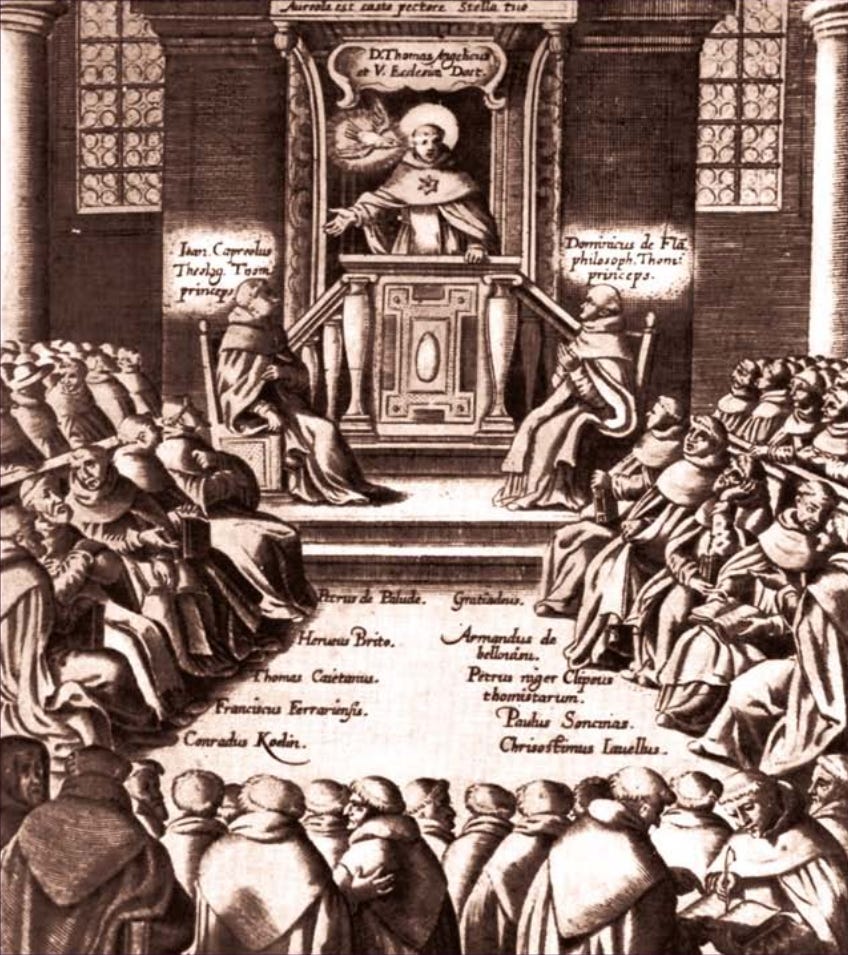
A Hasty Taxonomy of the Thomistic Sects
Future lectures will consider the history of Thomism. In this lecture, I shall only consider contemporary Thomism, that is, Thomism being done in recent times. And, as brevity is the soul of a newsletter, I shall not detain the reader with exhaustive catalogues. In due course, he shall become acquainted with all the nuance within each Thomistic school. For now, let us cut the landscape into six principal territories, sketch them with a hasty pen, drop a name or two, and swiftly move on.
A first group is made of those philosophers and theologians who try to reconcile the doctrines of Saint Thomas with the philosophy of Immanuel Kant. These took the name (or rather were given it) of “Transcendental Thomists.” Examples are Maréchal, Rahner, and Lonergan.
Others labour to bring together Aquinas and the Phenomenological School. Edith Stein and Karol Wojtyła (whom you might recognize more readily as Saints Teresa Benedicta of the Cross and John Paul II) are the prime examples. These are unsurprisingly termed “Phenomenological Thomists.”
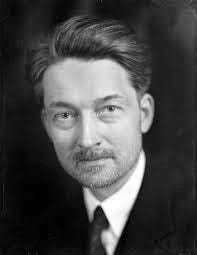
Others still, going by the name of “Analytical Thomists,” endeavour to pursue Thomism, but recurring to the tools of Analytical Philosophy… which broadly means “possible worlds semantics” and some degree of Symbolic Logic. Elizabeth Anscombe, Christopher Martin, and Eleonore Stump (who, if I may indulge in a bit of academic genealogy, is my own grandmother).2
A fourth “school” of Thomism is often called “Existentialist Thomism,” or “Thomistic Existentialism.” It stresses Saint Thomas’ doctrine of the “actus essendi” (which is Latin for “act of to-be,” which is English to something for another day). Usually, this group also (to my mind, over) emphasizes an historical approach; by which I mean they tend to exhibit a pronounced distaste for any historical developments. Gilson, Fabro, and Owens are sounding names.
Very concerned with what Thomism can say in dialogue with Modern Science is the River Forest school, as well with the Laval school. Important figures of this approach are Weisheipl and Wallace.
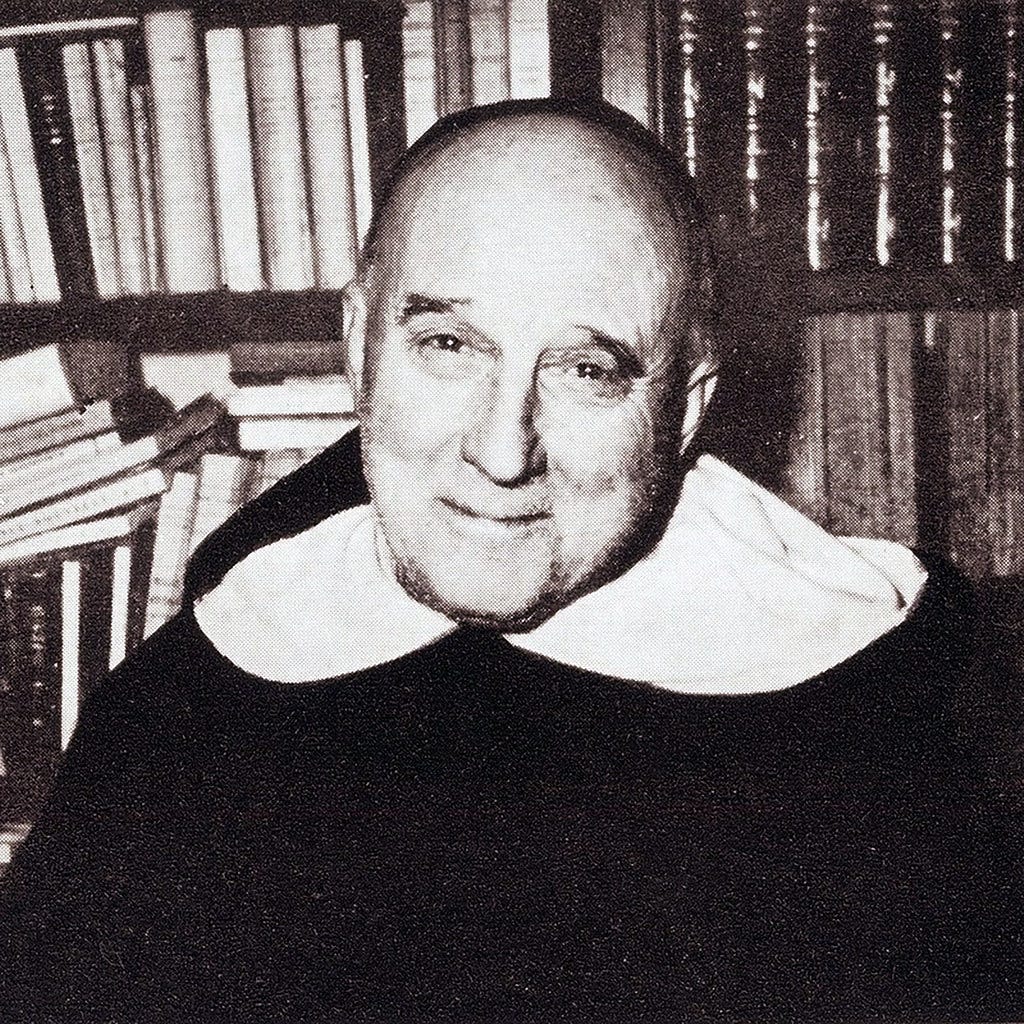
The last sect is sometimes called “Strict Observance Thomism,” which is a hard thing to define, but the reader may think of it as “Neo-Scholastic Thomism,” by which I mean a way of doing Thomistic Philosophy (and Theology) by means of the Scholastic method — of which I expect the reader to know nothing (yet). Some influential names are Hugon, Grenier, and Garrigou-Lagrange.
Some off the cuff comments
From what has been laid in front of him, the reader will have noticed that there is a wide range of meanings for “Thomism.” While some only take Aquinas to be an inspiration, others take him as a master. And, even among the latter, there is a wide range in how free his disciples feel to dissent from the master’s teachings.
I will not hide that my sympathies reside with “Neo-scholastic Thomism,” which I regard as following not only the doctrine, but also the methodology of Saint Thomas. Nonetheless, even the strictest of Thomists will not hold all of Aquinas’ doctrines. For instance, I do not think any living Thomist holds to the idea that Moon is incorruptible, and I have personally never met any Thomist which holds that there are demons trapped between the Moon and the Earth.
Now, there is, of itself, nothing incompatible between this Neo-Scholastic Thomism and the River Forest School inasmuch as one means by it “Thomism engaging with Contemporary Science.”3 Just as much, there is nothing incompatible between Neo-Scholastic Thomism and Existentialist Thomism—again, inasmuch as one means by it the recognition of the centrality of the doctrine of real distinction, as well the importance of an historical-exegetical approach to the sources.4
In fact, all of these can be usefully brought together. (And, on a side note, it seems to me this is what Thomists should strive for; this, I think, would bring a real renaissance of Thomistic Philosophy.) One might call this approach to Thomism (the term was coined by Jacques Maritain) a living Thomism.
As for Analytical Thomism, it seems both easier and more difficult to reconcile; of course, in different senses. It seems more easier, in that there is no particular body of teachings which are accepted or rejected by Analytical Thomists. But it seems more difficult, in the measure that they use analytical, rather than scholastic methodology. So, in a sense, it could be said that they may be very well reconciled in doctrines, but keep speaking in different languages.
As for Phenomenological and Transcendental Thomists, these are said to be Thomists in a much wider sense. They are certainly inspired by Thomas, but they do not claim to hold the whole of Thomistic doctrine.
Others try to sell you cheap Thomism.
Consider supporting my work:
a grounded, rigorous, living, and respectable Thomism.
But alas I begin to exhaust the limits of a newsletter, for which reason I ought to refrain from continuing. By consequence, the exact meaning of living Thomism — indeed, pray, the very meaning of Thomism, for thus far we’ve trotted only on the landscape of Thomism, and are yet to pursue the thing itself — ought to be addressed in our future lectures.
Gonçalo Costa
The Respectable Thomist
Bibliography
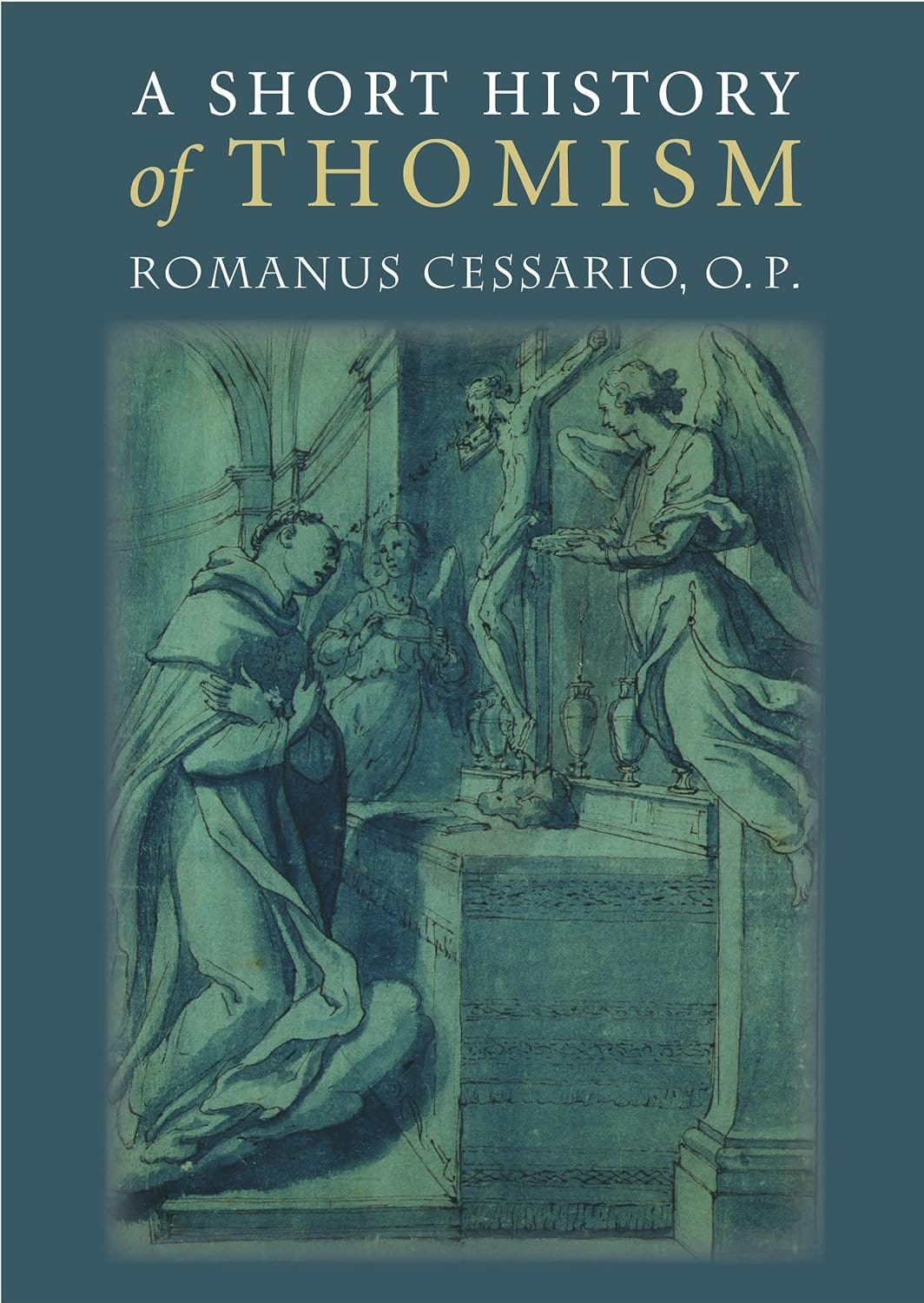
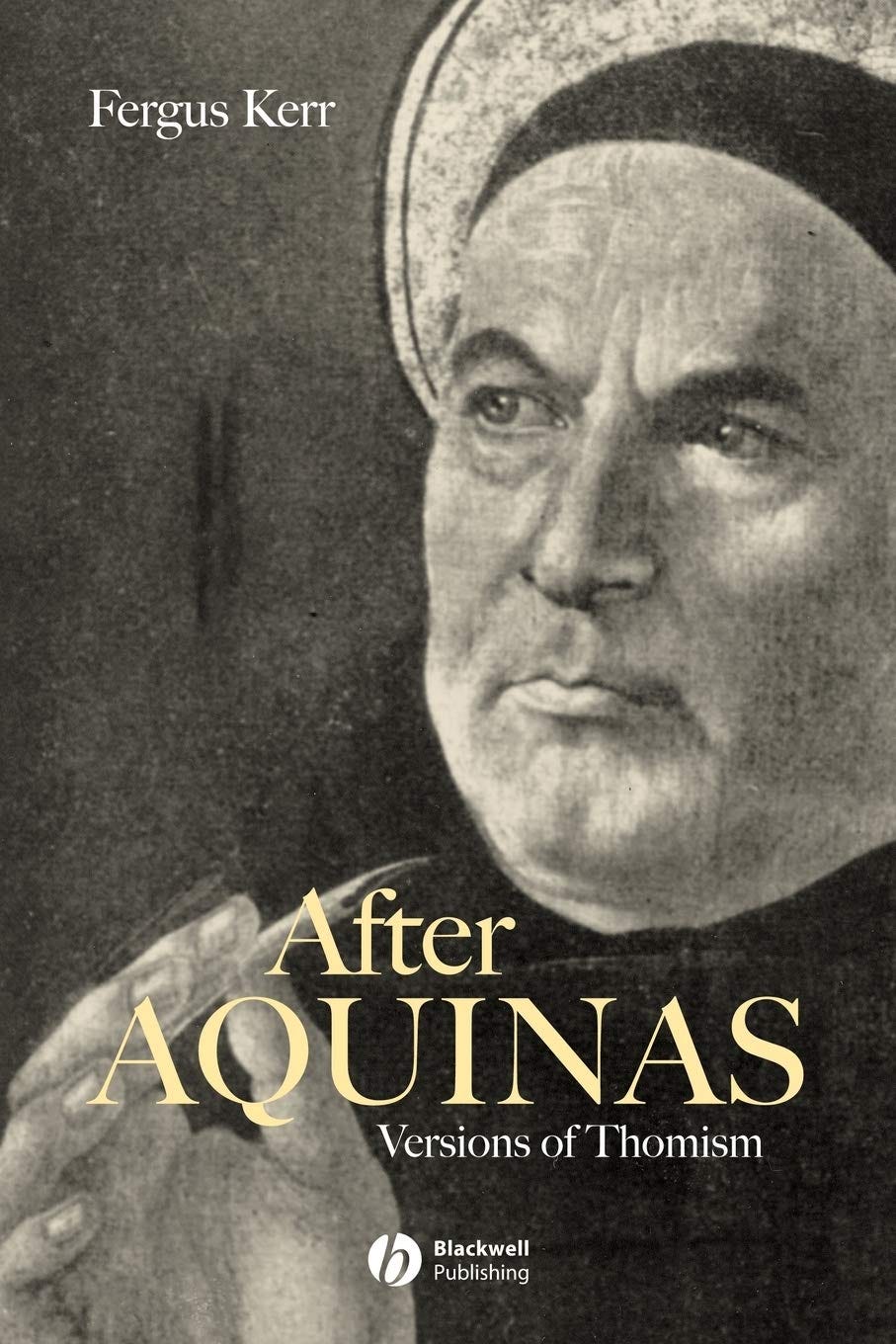
If the reader wishes to go deeper in these topics, he may consider the following works.
Sometimes people think of nominal definition as a loose, or working definition, and of real definition as a strict, or proper definition. But this is not strictly true. While the strictest of definitions will have to be a real definition, and nominal definitions are generally very loose, there can also be very loose, real definitions. For instance, “that transparent liquid, without colour, smell or taste, which comes out of the kitchen faucet” is a real definition of water.
There is even here some distinctions to be made, as people like Stump and Davies are much more committed to following Aquinas’ teachings than people like Anscombe and Geach.
There are some incompatibilities between Neo-Scholastic and River Forest Thomism inasmuch as the latter, as a school, holds to some theses which the former rejects. We may mention this when dealing with our Introduction to Philosophy lectures, and even our Natural Philosophy.
There is, of course, an incompatibility, inasmuch as Existential, or Historical Thomists may disagree and even scorn the Scholastic Tradition.
Given that the two phenomenological Thomists you mention - Stein and Wojtyla - are canonised Saints, while the names on the other lists carry no Saints, my personal inclination is to favour that "school". Of course I'm hoping the neo-Thomistic movement may gain it's first Saint through your own life.