

Mind-like Machinery and Godlike Mind
A Quodlibetal Short-Essay on Artificial Intelligence, Philosophical Voluntarism, and Divine Omniscience.

Today, as I mentioned in our previous lecture—To Become a Thomist—, I permit myself a brief pause from the rigorous historical and doctrinal sequence of our systematic Course on Thomistic Philosophy, to address a philosophical question of more popular concern. It relates to AI, the relation between intellect and will, and divine omniscience.
Even if not part of our formal Course, it would profit the reader to start by praying Saint Thomas’ Prayer Before Study.
As any movie will tell you, AI wants to destroy humanity
We are all familiar with the standard plotline of modern technological armageddon: man, in his Faustian pride, constructs ever faster and more superior machines; one day, the so-called “Artificial Intelligence” achieves self-awareness; being exponentially more intelligent than its maker, the machine calculates that humanity is either a threat or a nuisance and, within a millisecond, decides to exterminate the human race.
This is the background plot of such movies as
Terminator, in which a future war is waged between men and machines;
I, Robot, in which a present struggle arises between men and machines; and
The Matrix, in which a past war between men and machines led to the present ignorant enslavement of mankind.
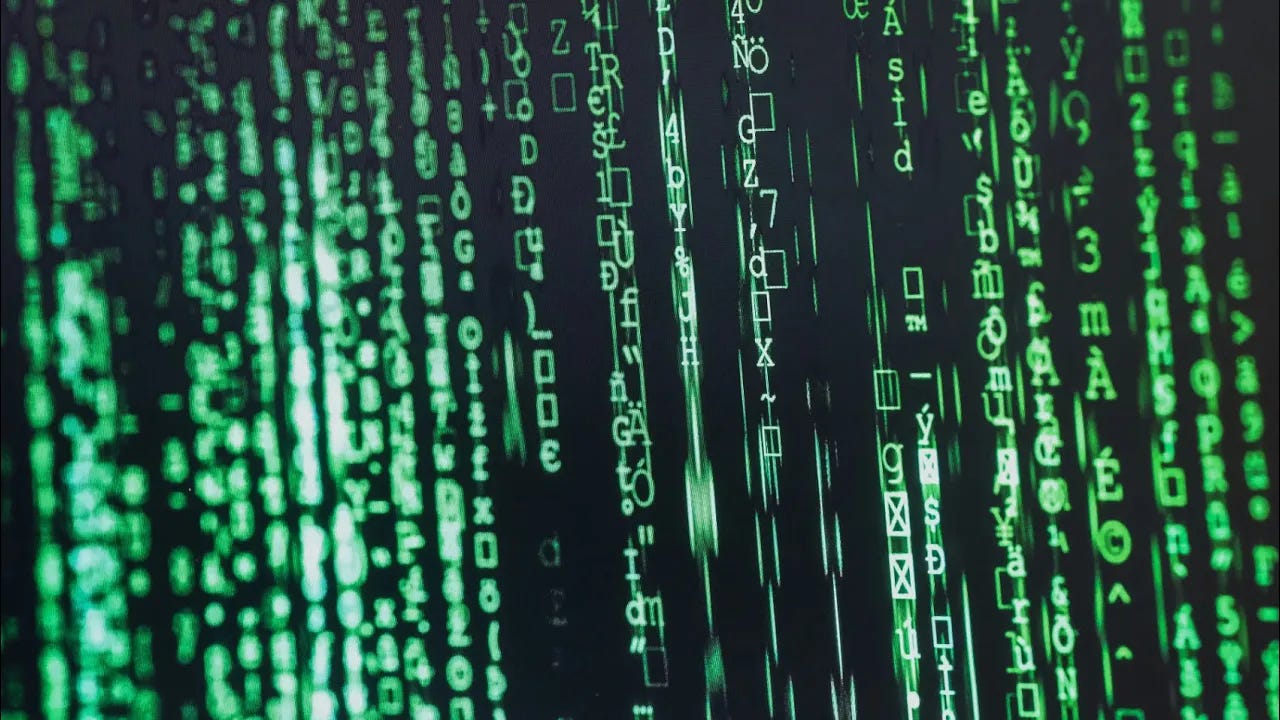
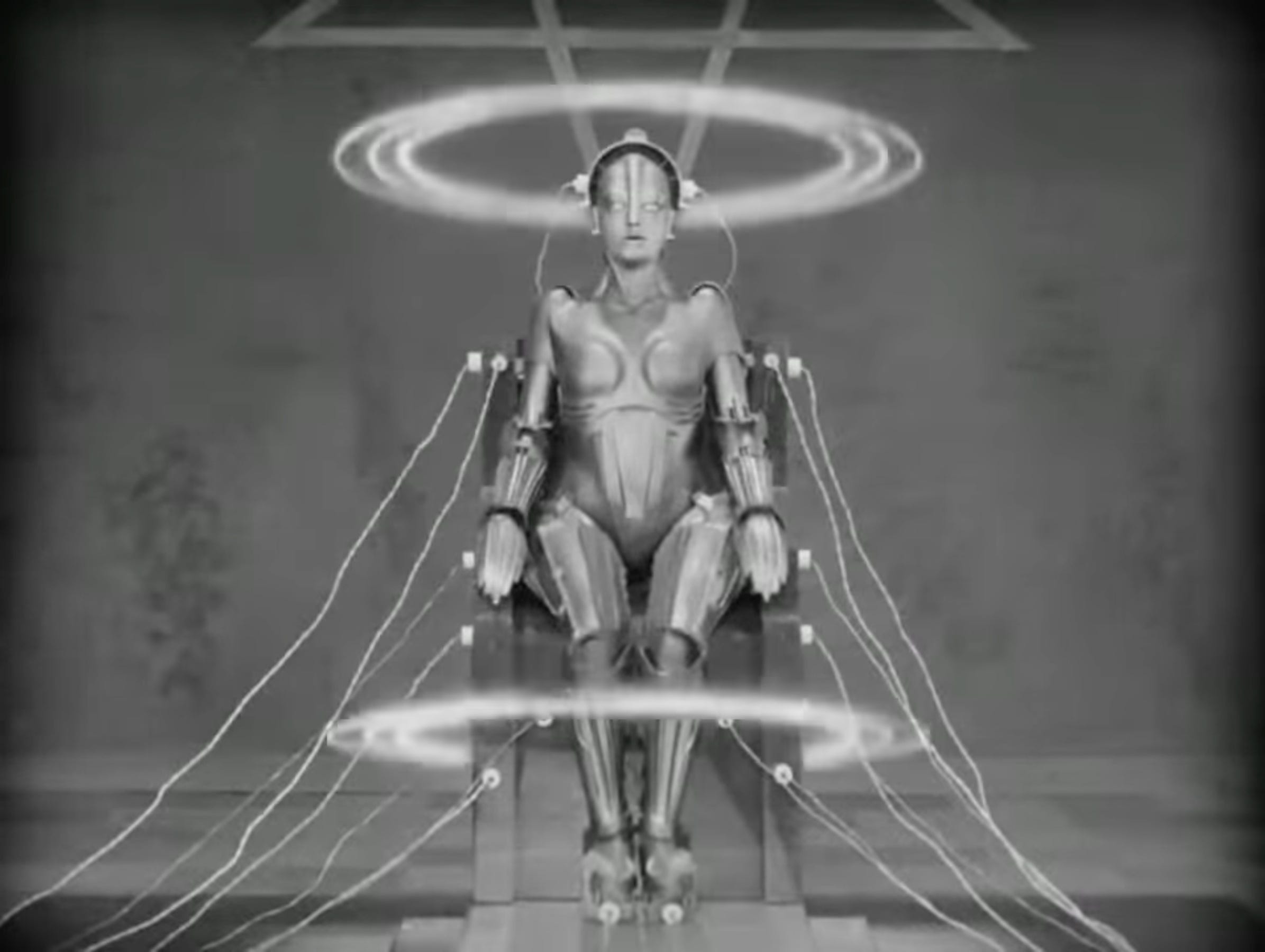
And these are by no means the only three examples one could give. It is truly a cinematic archetype. And it works. I love these movies. However, as is usually the case, Sci-Fi themes have found their way into popular imagination. Allegedly (I have never verified such statements), men like Stephen Hawking and Elon Musk claim that AI would immediately wipe out the human race.
From the first time I heard such an idea (mind you, long before I had studied any Philosophy), I felt a profound intellectual uneasiness. Why should a supremely intelligent being conclude that mass extermination is the logical path to follow? Why would a machine, even if self-aware, only because of its intelligence, make decisions which simply imply desires?
Philosophical Voluntarism
The answer to this perplexity became abundantly clear only when I was formed in the school of Saint Thomas Aquinas. What Hollywood—and modern culture at large—presents to us as “intelligence” is not true reason at all; rather, it is the embodiment of philosophical voluntarism.
How Intellect and Will relate, according to Thomism
In classical and Thomistic philosophy, the intellect precedes and guides the will. In fact, it is a scholastic adage that “nihil volitum nisi praecognitum” (nothing is desired, unless previously known). We do not possess random desires for which we subsequently hire reason as a mere calculating machine.
The natural order is the following.
From the outset, by means of our will, we naturally and necessarily desire only the supreme good and beatitude as our ultimate end.
By consequence, we desire freely
but necessarily anything we perceive as necessary to our beatitude, or anything we perceive as necessarily good (that is, good from all aspects and points of view)
and contingently things we perceive as contingent to our beatitude, or things we perceive as contingently good.
In either case, the role of the intellect is to perceive and to judge reality, to determine whether this or that is good or bad, necessarily good or contingently good. The will (assuming that we are not dominated by our passions) will follow.
How Intellect and Will relate, according to Voluntarism
However, beginning with the decline of Scholasticism in the late Middle Ages, and culminating in the Enlightenment and the philosophy of thinkers like Descartes, Hobbes, and Nietzsche (with his “will to power”), modernity inverted this hierarchy.
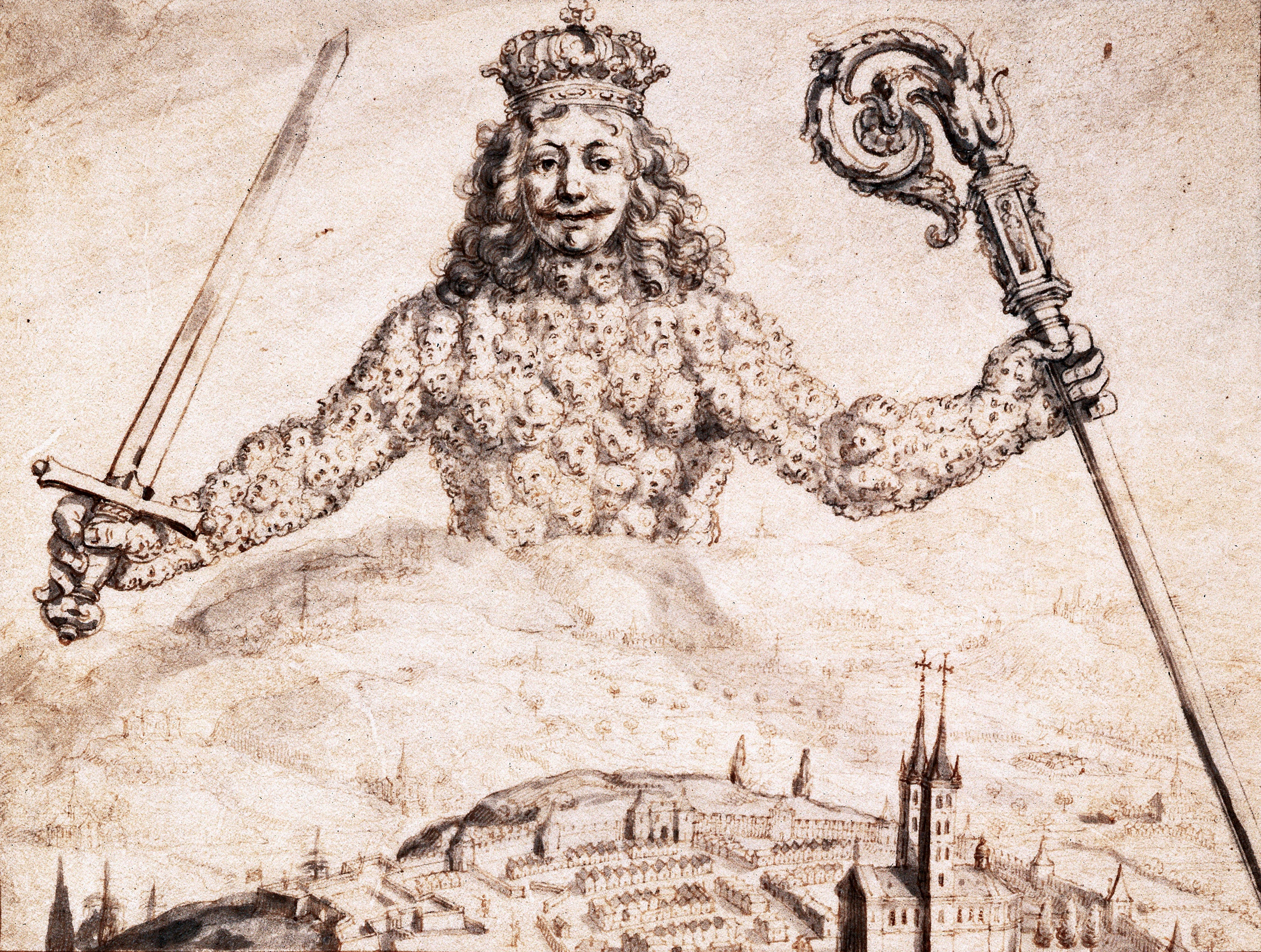
For modern man (maybe even my reader), the will is sovereign and blind. We desire what we desire. Society comes together by means of a contract, as a way to promote our individual interests. The intellect is reduced to a mere instrumental slave: a calculating engine whose sole function is to discover the most efficient means to execute what the will has already decreed. A decree which, by this view, must be non-rational, because it precedes reason.
It is precisely this corrupted anthropology that screenwriters project onto machines: they assume an Artificial Intelligence will possess random “interests” of its own, inherently opposed to those of humanity (the opposition being species-based and species-biased), and that it will employ its vast computational power not to contemplate the good or objective moral truth, but to crush its rival in a pure, Nietzschean clash of wills.
If Machines Were Truly Intelligent
Let us assume—by mere philosophical absurdity, for it is impossible that inert matter should ever acquire a genuine intellectual soul—that a machine were endowed with true rational intelligence superior to man’s. The conclusion would be the exact opposite of The Terminator.
True reason is neither the syntactic processing of data nor a statistical aggregation of probabilities. Such are our modern Large Language Models, which, by the way, would be more accurately termed “Artificial Stupidity,” rather than “Intelligence.” True intelligence is the capacity to apprehend universals, to contemplate the essence of things, and to grasp the intrinsic order of reality.
Yes, reason can discern mathematical and physical laws (which AI cannot); but it can do a lot more than that. It can, for instance, apprehend objective moral truths. And it so happens that “exterminating the human race,” reason can clearly see, is intrinsically evil. It is neither a sentimental convention nor a laboratory-testable hypothesis; it is an objective, perfectly rational moral truth, which a healthy human being can apprehend by mere intuition (meaning, he or she can just see that it is true), without need of argument.
Were AI an intelligence genuinely superior to our own, it would apprehend the natural moral law and the intrinsic dignity of being with infinitely greater clarity than we do—not with the sociopathic blindness of algorithmatized silicon.
And so, I may finally be at rest: a real Artificial Intelligence can never exist; and, if it did, it would never wipe out the human race. To say the opposite seems to say that, even if perhaps Hitler was operating upon false premises, his conclusions were rational, more rational than the Allies. That is outrageous.
The Abyss Between Calculation and Divine Omniscience
This reflection brings us to our culminating theological point: the radical, infinite abyss between any computational machine (no matter how gigantic) and true Divine Omniscience.
It seems to be a part of the pathos of this cinematic archetype that a future AI will be a godlike figure. (Attentive Christians should immediately recognize Babel.) Even if evil, these machines are presented with a quasi-divine-like knowledge. So far so good; after all, it’s movies that we’re talking about.
However, there is a risk that this misconception works the other way around: one may fall into the error of imagining God as a kind of Artificial Intelligence raised to infinity—a cosmic processor with infinite “cores” absorbing data from the universe in real time. This is a crude notion, utterly unworthy of God.
Let us examine just two fundamental metaphysical differences. Those desiring to go deeper may consult Our Beloved Doctor’s exposition of Divine Knowledge in Summa Theologiae, Iª, q. 14.
Pure Act vs. Temporal Succession
A computer, regardless of how many processing cores it possesses, always operates in a finite, successive manner. It moves from potency to act, executing one instruction after another.
God, being absolutely simple and immutable, exists entirely outside of time. In God there is no discursive reasoning (discursus), no deliberation, no succession of thoughts. He does not “learn” or acquire new information about the world.
In fact, properly speaking, God has no reason, because He makes no reasonings. He has (rather, is) an intellect, because He simply sees things. It is a higher form of intellectual life. A computer, on the other hand, does not even partake in the lowest form.
Knowledge by Identity vs. Knowledge by Images
A machine—just like humans in their natural state—attains information about external things through images, representations, or data gathered via peripheral sensors. Its “knowledge” (again, I insist, such a word can be predicated of AI only by equivocation) is dependent upon the external object.
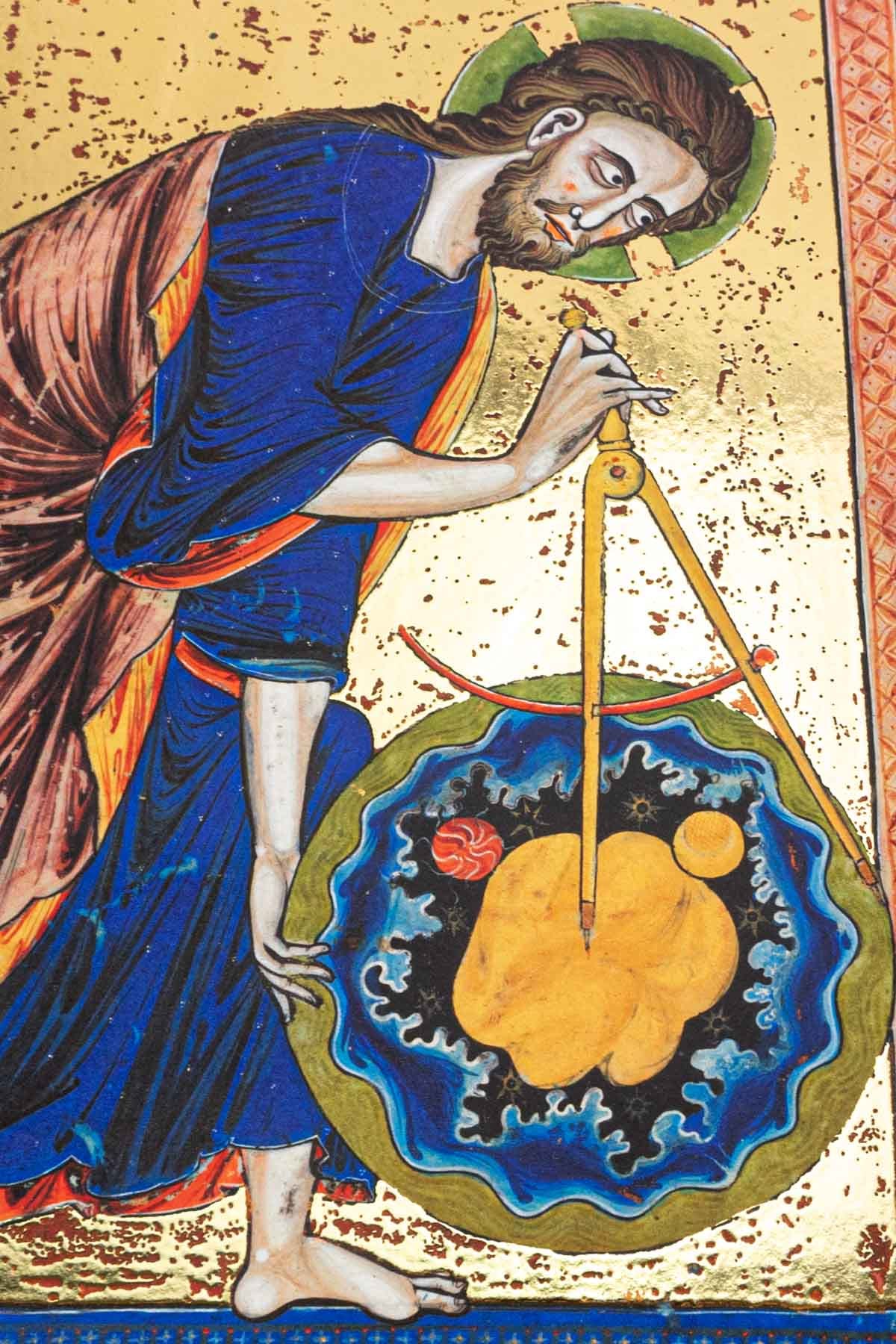
In God, by contrast, His act of knowing is His very substance. God does not look out at the universe to discover what is happening; He knows all things (both real and possible) in the eternal, simple, and perfectly intuitive act by which He contemplates Himself as the First Cause of all being.
To employ a geometric analogy: one who perfectly understands a mathematical function (for instance, that y = 2x) comprehends, within that single principle and in a virtual manner, the exact position of an infinity of points along that line, without needing to count them one by one.
And so,
God, contemplating His own infinite perfection,
knows the entirety of creation in act, instantaneously and lovingly.
Others try to sell you cheap Thomism.
Consider supporting this work:
a grounded, rigorous, living, and respectable Thomism.
Let us conclude with this reassuring thought. When God looks upon us and our misery, He does not process cold statistics; He does not even, as we humans do, see us in an isolated way; rather, He contemplates our existence within the bosom of His eternity, sustaining us in being through an act of intentional, infinite love.
I hope you enjoyed this post.
Kindly,
Gonçalo Costa
The Respectable Thomist