
The Undisputed King of Catholic Thought
ISTA. Lecture 7. On the authority of St. Thomas: the Aeterni Patris and the 24 Thomistic Thesis

[The study of truth is a spiritual discipline, and theologians are borne on their knees. I instruct the reader to begin this, and every lecture, by elevating his mind to God. I suggest Saint Thomas’ Prayer Before Study.]
In last week’s lecture, The Most Brilliant Light of the Church, we considered Saint Thomas’ authority between his canonization and his declaration as Doctor of the Church. Today, our focus will be on the Aeterni Patris and the 24 Thomistic Theses.
Since Pope Saint Pius V, and up to Pope Saint John XXIII (who called for the Second Vatican Council) there were 31 popes. Of these, eleven did not mention Saint Thomas’ doctrine.1
The Encyclical Aeterni Patris
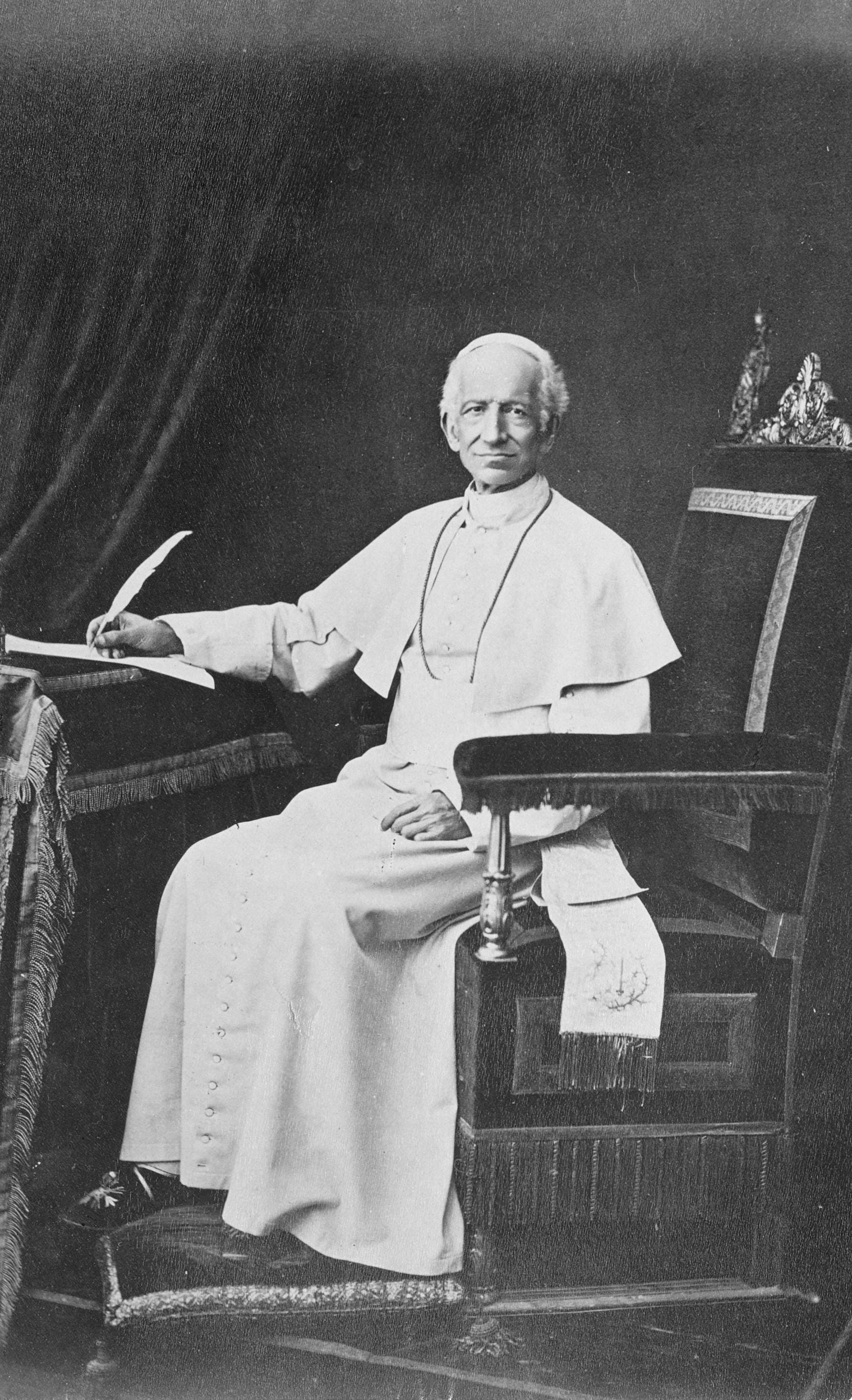
Aeterni Patris was an encyclical written by Pope Leo XIII in 1879. Now, it is important to keep in mind that the 19th century was ravaged by the Enlightenment, Rationalism, and later, Modernism. Thus, the Church underlined what she had always known — that to properly defend Divine Revelation, an invulnerable philosophical foundation is required.
So, in the encyclical, Pope Leo XIII did not merely “recommend” Saint Thomas; he triggered a massive intellectual restoration. This is sometimes called the revival of modern day Thomism. And, even if such a title does not seem to be historically accurate,2 the fact of the matter is that the Pope declared Thomistic philosophy as the only framework capable of combating modern errors and serving as the bedrock for Theology. This marks the historical transition of Aquinas’s doctrine from being “the best option” to being forcefully adopted as the Church’s own official doctrine.
As the diligent reader may easily locate and study this document online (which I strongly urge), I shall confine myself to a few salient remarks. In this encyclical, Pope Leo XIII points to the necessity and usefulness of a sane and robust Philosophy, which would be able to conveniently serve Theology, without ceasing to be Philosophy. In doing this, the Holy Father mentions three ways in which Philosophy can serve Theology:
pave the way for faith;
elevate theology to the status of a true science;
and defend revealed truths against their detractors. Saint Thomas possesses these qualities eminently.
About the first, he says:
“Philosophy, if properly employed by the wise, can certainly pave and facilitate in some way the path to the true faith, and suitably prepare the minds of its students to receive revelation.”
About the second, he says:
“A perpetual and manifold use of philosophy is required, so that sacred theology may take on and receive the nature, habit, and character of a true science.”
About the third, he says:
“It also belongs to the philosophical sciences to religiously defend the truths taught by revelation and to resist those who dare to impugn them.”
Then, the Pope announces, the Philosophy of Saint Thomas Aquinas is eminently suited to such a service. It is, he says, a Philosophy:
Universal, profound, solid, and clear;
Eternal;
The sanest, safest, most conformed to the faith.
About the first, he says:
“There is no part of philosophy which he did not handle with acuteness and solidity: he wrote about the laws of reasoning, about God and incorporeal substances, about man and other sensible things, about human acts and their principles, so that nothing is wanting in him.”
About the second, he says:
“Having employed this method of philosophy, he succeeded single-handed in conquering the errors of past times, and in supplying invincible weapons to refute those which will constantly renew themselves in future ages.”
About the third, he says:
“Even civil and domestic society, which are in grave danger because of the dominant plague of perverse opinions, would certainly live more peacefully and securely if, in the Academies and schools, a sounder doctrine were taught, one more in conformity with the teaching of the Magisterium of the Church, such as is contained in the volumes of Thomas Aquinas.”
My only hope is that the reader will be amazed at this, as I was the first time I read it — I had been “brought up” in the Church under the mentality that, as long as one did not deny dogma, all positions were equal, and Saint Thomas was just a venerable, old position, but equal to others nonetheless.
The Pope, however, concluded clearly:
“With wise forethought, not a few cultivators of the philosophical sciences have, in these last times, attempted to restore philosophy by renewing the illustrious doctrine of Thomas Aquinas and returning it to its ancient splendor. We have learned, venerable brothers, that many of your [episcopal] order, with equal desire, have courageously entered upon this path, and it is with great joy that we acknowledge it. These we ardently praise and exhort to remain in the plan they have begun. To the rest among you, in particular, we make it known that nothing is more pleasing to us, nor more desirable, than that all of you should supply copiously and abundantly to the studious youth the purest streams of wisdom that flow in a continuous and rich vein from the Angelic Doctor.”
The Reception of the Encyclical
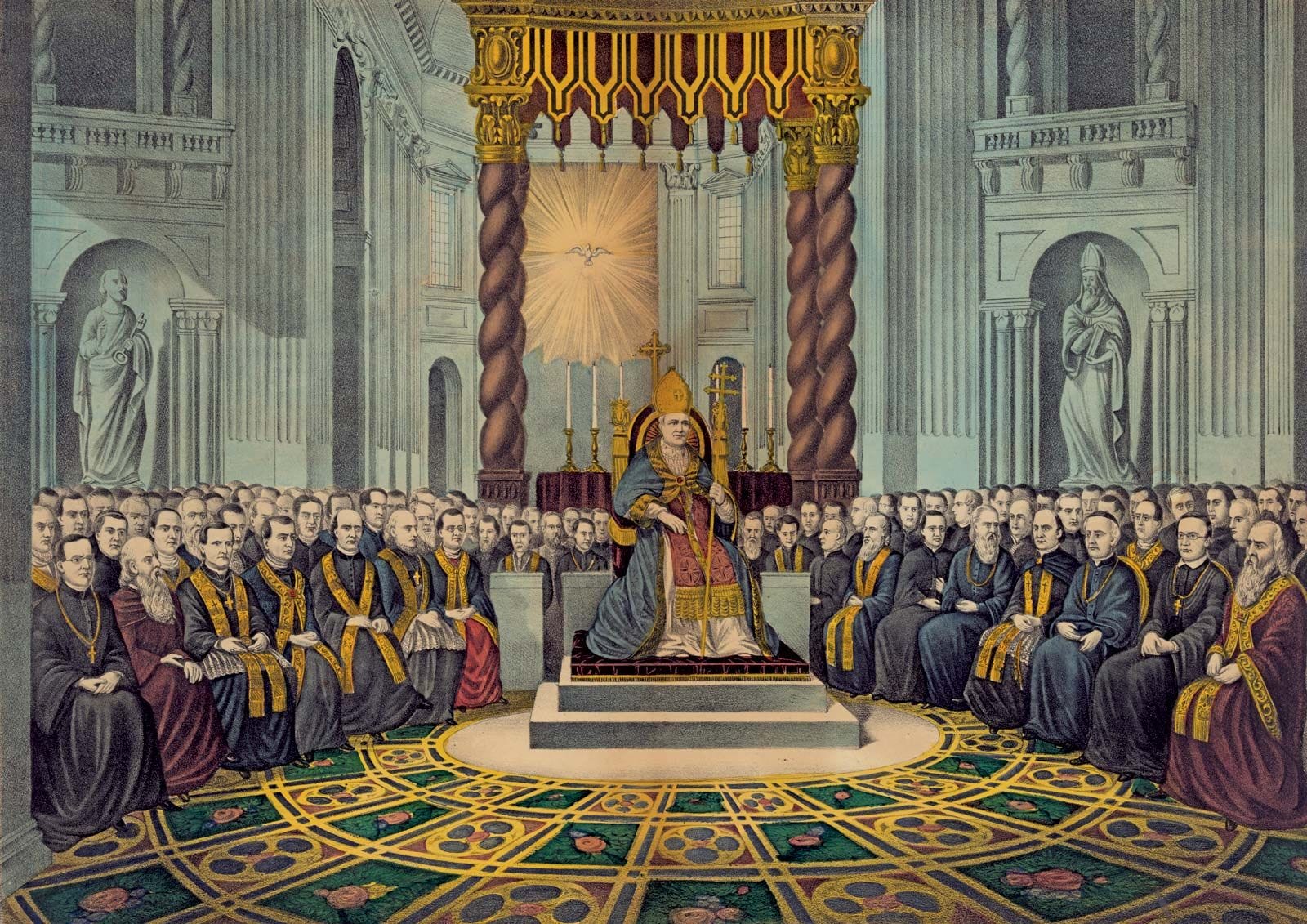
Almost as remarkable as the encyclical, was its reception in the ordinary magisterium of the Church. The claim of Fr. Santiago Ramírez, O.P., in his introduction to the Summa Theologiae, is that this reception is equivalent to an Ecumenical Council. He says:
“Such is the content of this most celebrated document, which earned the applause of the entire Catholic world and provoked a shower of flowers in honor of Saint Thomas, offered by almost all Cardinals, Patriarchs, Archbishops, Superiors General of religious Orders and Theological Faculties of the entire world, and by a large part of the Cathedral Chapters, Seminaries, and the most prominent personalities of Catholic science. A true plebiscite of the entire Christian world in favor of the candidacy of Saint Thomas as the undisputed king of Catholic thought. This voice of almost all the Bishops, united with that of the Pope and acting as such, is equivalent to a true Ecumenical Council.”
Fr. Ramírez may sound a somewhat hyperbolic here, but Catholics do indeed hold that the Universal and Ordinary Magisterium of the Church can definitively and infallibly bind the faithful.3 So teaches the First Vatican Council.4
Again, Fr. Ramírez may seem to be exaggerating. I personally believe he is. However, there is an impressive list of cardinals, archbishops, and bishops who wrote back to the Pope thanking and praising and agreeing with his encyclical — keep in mind, this is before our digital age.
Cardinals and Archbishops: Prefect of the Sacred Congregation of Studies; of Naples and Suffragans; of Verona and Suffragans; of Westminster and Suffragans; Archbishop of Bordeaux; of Antioch and Suffragans; of Vercelli and Suffragans; of Adrianople and Suffragans; of Montreal, with the Chapter and Diocesan Clergy; of Genoa; of Modena and Suffragans; of Udine; of Palermo; of Cagliari and Suffragan; of Lucca; of Sens and Suffragans; of Avignon; of Granada, the Chapter and professors of the Theological Faculty of Sacromonte; of Salzburg and Suffragans; of Malines and all the Bishops of Belgium.
Bishops: of Segni; of Alatri and Chapter; of Ripatransone and Chapter; of Loreto; of Ancona; of Parma; of Piacenza; of Cremona; of Mutilo; of Novara; of Lodi; of Caserta and Chapter; of Lecce; of Angoulême; of Mazara; of Spalato; of Hermopolis; of Basel; of Cuenca; of Vitoria-Gasteiz; of Salamanca; of Segorbe.
The 24 Thomistic Theses
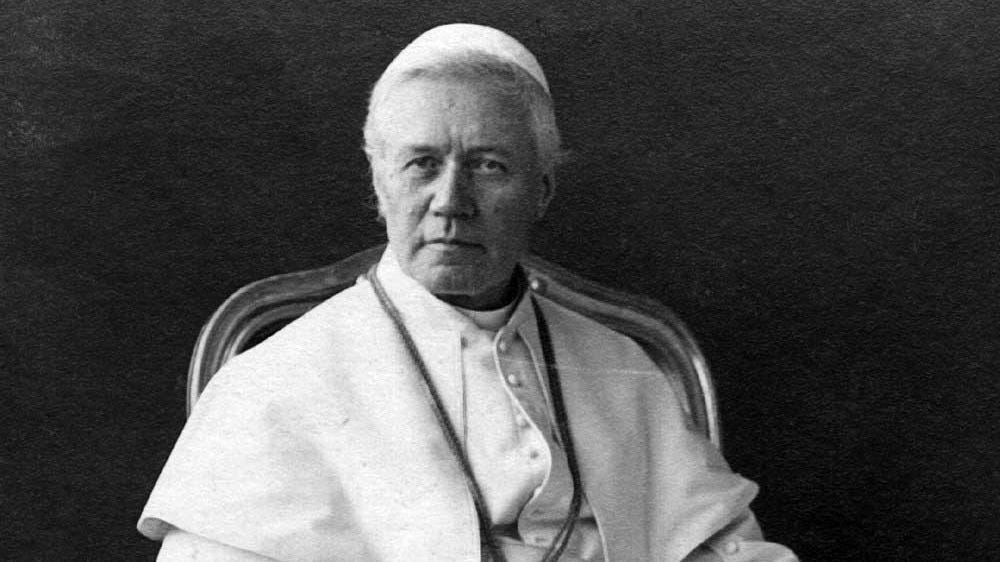
Pope Leo XIII was succeeded by Pope Saint Pius X. The latter was perhaps the Pope who most emphasized the importance of adhering to the doctrine of Saint Thomas. In his Pascendi Dominici Gregis (1907), he says:
“Regarding studies, we will and strictly order that scholastic philosophy be made the foundation of the sacred sciences. […] Let it be clearly understood that the scholastic philosophy we prescribe is principally that which was taught by Saint Thomas Aquinas, concerning which Our Predecessor [ie., Leo XIII] decreed, and which We desire all to follow with vigor; whose decree, if necessary, we repeat, confirm, and order to be strictly observed by all. It shall be the duty of the Bishops, should these studies have been neglected in the Seminaries, to urge and demand that, from now on, this be observed. Likewise, we command that the Superiors of Religious Orders principally observe this. And let all those who teach be aware that they shall not depart from Saint Thomas, especially in metaphysics, without grave problems.
The same is said by the Pope, almost verbatim, in his bull Sacrorum Antistitum. However, it so happened that the Pope had used the word “principally,” not the word “exclusively.” This raised problems, to which the Pope answered seven years later, on June 19 1914, with his Doctoris Angelici:
It happened, therefore, that because we said in this document that the philosophy of Aquinas was principally to be followed, without saying it was to be followed exclusively, some convinced themselves that they would fulfill Our will, or at least not contradict it, if they taught the philosophy of any of the scholastic Doctors, even when such philosophy was repugnant to the principles of Saint Thomas; but they were entirely mistaken regarding the recommendation to follow Saint Thomas. Because of this, they led many souls into error. It is evident that, by establishing Thomas as the principal guide of scholastic philosophy, We meant to refer maximally to his principles, upon which that philosophy is founded and built.
Lest someone think the Pope is just being picky (after all, metaphysics is not a matter of faith), the Pope insists:
“Indeed, one cannot relapse into the opinion of certain ancients, who held that it matters not to the truth of the Faith what anyone thinks about created things, provided one thinks correctly concerning God; for an error of knowledge regarding the nature of created things consequently leads to a false knowledge of God.”
And so, the Holy Father speaks clearly:
“Therefore, the principles of philosophy established by Aquinas must be preserved sacred and inviolate, for from them we derive the science of created things, which is thus brought into congruent harmony with the Faith, and by them all errors of whatever age are refuted.”
And here the Pope adds one of the most magnificent commendations of Saint Thomas I have ever heard.
“If the doctrine of any other author or saint has been approved — at whatever time it may have been — by Us or by Our predecessors, with a singular commendation and an invitation and order that it be propagated and defended, it is easily understood that it was recommended only insofar as that doctrine was in conformity with the principles of Saint Thomas, or was in no way opposed to them.”
And so the bull ends with a harsh prescription, the harshest I know of.
“For this reason, no Institute will subsequently be granted the faculty to confer academic degrees in Sacred Theology if they do not faithfully observe what We prescribe in this letter. Institutes or Faculties, Religious Orders and Congregations, which already legitimately possess this faculty of granting academic degrees or other similar titles, even if only for domestic purposes, or even solely within their own institution, shall be deprived of this faculty or will lose it if, after three years, they do not religiously adapt themselves to these Our prescriptions.”
“Excellent,” the reader might be thinking, “but which exactly are these philosophical principles”? Thus, on July 27th 1914, the Sacred Congregation for Studies, with approval from the Pope, wrote:
“After our Most Holy Lord, Pope Pius X, by his Motu Proprio Doctoris Angelici, published on the 29th of June 1914, had salutarily prescribed that in all schools of philosophy the principles and major propositions of Thomas Aquinas were to be sacredly preserved, several professors from various Institutes proposed to this Sacred Congregation of Studies the analysis of certain theses, which they themselves were accustomed to transmit and defend as being in exact agreement with the principal principles of the Holy Master, especially in the field of metaphysics. This Sacred Congregation, having duly examined the aforementioned theses and submitted them to the Most Holy Lord, by mandate of His Holiness, responds that they clearly contain the principles and major declarations of the holy Doctor.”
And so were born the famous 24 Thomistic Theses. Eventually, in this Course on Thomistic Philosophy, we will study them closely. Now, however, it is enough for the reader to know that they cover:
ontology (the study of common being);
cosmology (the study of material being);
psychology (the study of animated being);
and [natural] theology (the study of divine, uncaused being).
Others try to sell you cheap Thomism.
I’m offering you grounded, rigorous, living, and respectable Thomism.
Grounded, because, rather than an a priori abstraction, it resolves back into reality. Rigorous in its scholastic method. Living, because it didn’t die in the 13th century, but lives on to our days in its rich tradition. And respectable, because in this way it is equipped to achieve the truth.
The way to achieve it is the following.
Thorns and thistles; toil and tears; constant thirst, and thraldom to reality.
Consider supporting this work.
In today’s lecture, we have considered Saint Thomas’ authority according to the Aeterni Patris and the 24 Thomistic Theses. Next week, our focus will be the period before the Second Vatican Council.
Gonçalo Costa
The Respectable Thomist
Bibliography
If the reader wishes to go deeper in these topics, he may consider — besides the Papal Documents mentioned above — the following works. I was unable to find them for sale, but the reader can easily find them online.
“Introducción,” from the BAC edition of the Summa Theologiae, written in Spanish, by Fr. Santiago Ramírez, O.P.
De Auctoritate Doctrinali S. Thomae Aquinatis, by Fr. Santiago Ramírez. Originally in Latin, but translated to English here.
Sanctus Thomas Aquinas “Doctor Communis” Ecclesiae, written in Latin, by Fr. Joachim Joseph Berthier, O.P.
Gregory XIII (1572–1585); Sixtus V (1585–1590); Urban VII* (1590); Gregory XIV* (1590–1591); Innocent IX* (1591); Clement VIII (1592–1605); Leo XI (1605); Paul V (1605–1621); Gregory XV* (1621–1623); Urban VIII (1623–1644); Innocent X* (1644–1655); Alexander VII (1655–1667); Clement IX* (1667–1669); Clement X* (1670–1676); Bl. Innocent XI* (1676–1689); Alexander VIII* (1689–1691); Innocent XII (1691–1700); Clement XI (1700–1721); Innocent XIII (1721–1724); S.D. Benedict XIII (1724–1730); Clement XII (1730–1740); Benedict XIV (1740–1758); Clement XIII (1758–1769); Clement XIV (1769–1774); Pius VI (1775–1799); S.D. Pius VII (1800–1823); Leo XII (1823–1829); Pius VIII* (1829–1830); Gregory XVI* (1831–1846); Bl. Pius IX (1846–1878); Leo XIII (1878–1903); and St. Pius X (1903–1914). Those marked with “*” did not mention Saint Thomas in their writings.
While it is true that Thomism suffered a decline in the late XVIII century, so that barely any prominent Thomist can be pointed to between 1790 and 1830, it is also true that Pope Leo XIII’s encyclical is part of the Thomistic revival, rather than its starting point. Just to mention a few notable such Thomists: Vincenzo Buzzetti (1777–1824); Serafino Sordi (1793–1865); Domenico Sordi (1790–1880); Luigi Taparelli d’Azeglio (1793–1862); Matteo Liberatore (1810–1892); Gaetano Sanseverino (1811–1865); Joseph Kleutgen (1811–1883); Salvatore Tongiorgi (1820–1865); and Tommaso Maria Zigliara (1833–1893).
As a poor philosopher, I will not venture much into this field. But, for the profit of the reader, I will recall that the Catholic Church teaches many things which are not infallible, but are still to be held by the faithful, except by a grave reason. The mode of the assent (and how grave the reason has to be) varies from doctrine to doctrine — so, for instance, a doctrine “proxima fidei” (proximate to the faith) requires religious assent, while a doctrine “theologice certa” (theologically certain) requires theological assent, and so on.
But, among the infallible doctrines of the Church, there are three kinds. Starting from the bottom, one has dogmatic facts, which were not revealed, but were nonetheless infallibly defined by the Church — one must hold these because the Holy Spirit promises to guide the Church (Ecclesia), and thus we say it must be held by ecclesiastical faith. Secondly, one has those things which were formally and clearly revealed, and which are thus to be held by our faith on divine revelation, and are accordingly believed by divine faith. Finally, there are the dogmas, which were not only formally revealed, but also defined by the Catholic Church. They are thus to be believed by divine and catholic faith.
For a summary of all these divisions, check Fr. Austin Woodbury’s Sacred Theology. For a lengthier exposition, check Fr. Ludwig Ott’s Fundamentals of Catholic Dogma.
Dei Filius, ch. 3: “Porro fide divina et catholica ea omnia credenda sunt, quae in verbo Dei scripto vel tradito continentur, et ab Ecclesia sive solemni iudicio sive ordinario et universali magisterio tamquam divinitus revelata credenda proponuntur.” (“Furthermore, by divine and catholic faith all those things are to be believed which are contained in the word of God as found in scripture and tradition, and which are proposed by the church as matters to be believed as divinely revealed, whether by her solemn judgment or in her ordinary and universal magisterium.”)